

Have you ever wondered where your data goes when you use Google Drive or watch Netflix? Every photo you upload, every movie you stream, and every file you save online is stored somewhere beyond your phone or laptop, yet it is always available whenever you need it.
This is where cloud computing comes in. In simple terms, cloud computing means storing and accessing data and applications over the internet instead of keeping everything on your personal device. It allows you to use powerful computer resources remotely, making everyday digital activities faster, easier, and more flexible.
Understanding the cloud computing description is important today because almost every modern service relies on it, from social media and online banking to business software and mobile apps. Knowing how it works helps you better understand the technology you use every day and how your data is managed in the digital world.
What is Cloud Computing (Core Definition)
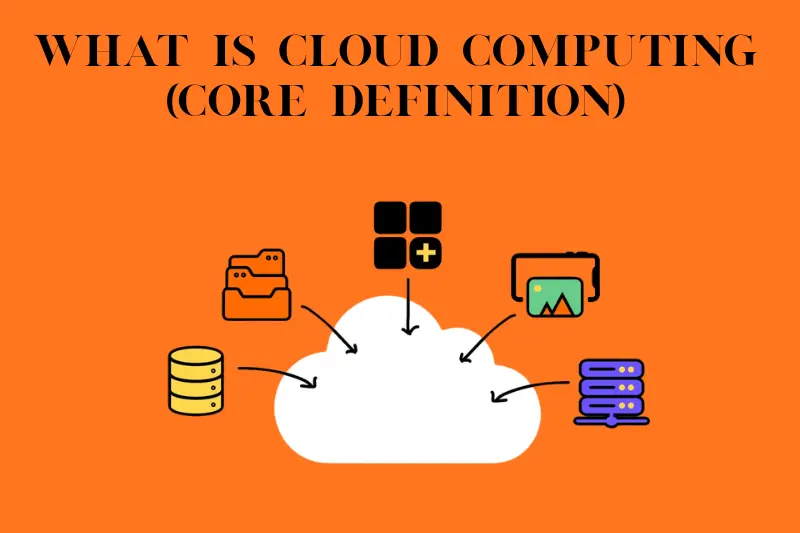
Cloud computing is a way of using computers and software over the internet without needing to install or store everything on your own device. Instead of relying on your phone or laptop to hold all your files and run heavy applications, cloud computing allows you to access those resources from powerful remote servers.
In a simple cloud computing description, it means you are using someone else’s advanced computer system through the internet to store data, run applications, and manage information. These systems are maintained by cloud service providers, so users do not have to worry about hardware, maintenance, or storage limits.
For example, when you upload photos to Google Drive or iCloud, those files are not stored inside your phone permanently. They are saved in the cloud and can be accessed anytime from any device with an internet connection. Similarly, services like email, online document editing, and video streaming all work using cloud computing in the background.
In short, cloud computing shifts computing power from local devices to the internet, making technology more accessible, flexible, and efficient for everyone.
How Cloud Computing Works
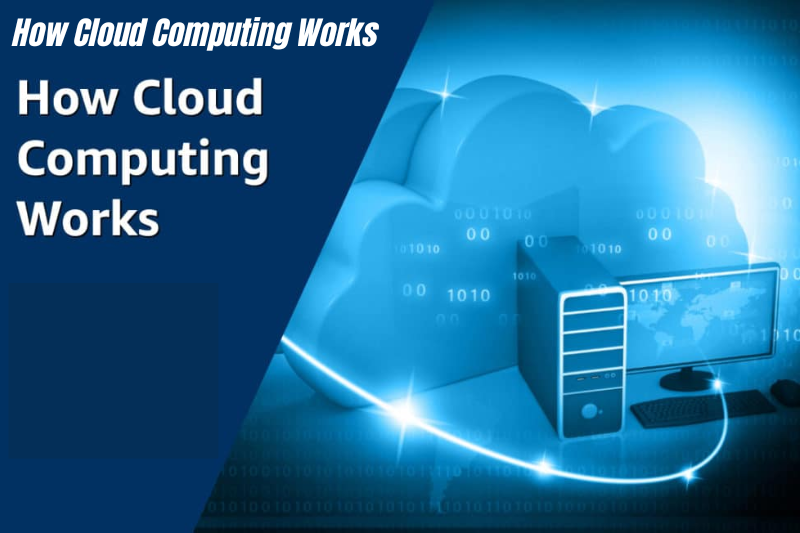
Cloud computing works by using a network of powerful remote computers called servers that are located in data centers around the world. Instead of storing files or running applications on your own device, you connect to these servers through the internet and use their resources whenever needed.
When you upload a file, open an app, or stream a video, your request is sent through the internet to a cloud server. That server processes your request, retrieves the data, and sends it back to your device in just a few seconds. This entire process happens so quickly that it feels like everything is happening on your own device.
A simple cloud computing description of how it works can be broken into three steps. First, data is stored on remote servers instead of local storage. Second, users access that data through the internet using any device such as a mobile phone, laptop, or tablet. Third, cloud service providers manage all the hardware, security, and performance in the background so users can focus only on using the service.
This system makes computing more flexible because you are not tied to a single device. Whether you are working from home, traveling, or switching devices, your data and applications are always available as long as you have an internet connection.
Types of Cloud Computing
Cloud computing is not a one size fits all system. It comes in different types depending on how services are delivered and who manages them. Understanding these types gives a clearer cloud computing description and helps you see how flexible this technology really is.
The first type is Public Cloud, where services are delivered over the internet by third party providers. These resources are shared among many users but remain secure and separate. Most everyday tools like online storage and email services use this model because it is cost effective and easy to access.
The second type is Private Cloud, which is dedicated to a single organization. Unlike public cloud, it offers more control and higher security because the infrastructure is used by only one company. Large businesses and institutions often use private cloud for sensitive data and internal systems.
The third type is Hybrid Cloud, which combines both public and private cloud systems. This allows organizations to keep critical data secure in a private environment while still using the flexibility and cost savings of public cloud services for less sensitive tasks.
Together, these types show how cloud computing can be adapted for different needs, from personal use to large scale business operations.
Real World Examples of Cloud Computing
Cloud computing is already a part of everyday life, even if people do not always notice it. A simple cloud computing description becomes much clearer when we look at familiar services we use daily.
One of the most common examples is Google Drive, where users store files, photos, and documents online instead of keeping them only on their device. This makes it easy to access data from anywhere.
Another example is Dropbox, which allows people to save and share files securely across different devices. It is widely used for both personal and professional file sharing.
Streaming platforms like Netflix also rely heavily on cloud computing. When you watch a movie or series, the content is delivered from cloud servers, ensuring smooth playback without needing to download large files.
Apple’s iCloud is another strong example, helping users back up photos, contacts, and app data so they can restore everything when switching devices.
Even online banking systems depend on cloud computing to process transactions securely and in real time, allowing users to manage their money from anywhere.
These examples show that cloud computing is not just a technical concept, but a technology that powers many of the services people use every single day.
Benefits of Cloud Computing
Cloud computing offers many advantages that have made it one of the most important technologies in the modern digital world. A clear cloud computing description is incomplete without understanding why so many individuals and businesses rely on it today.
One of the biggest benefits is cost savings. Users do not need to buy expensive hardware or maintain physical servers. Instead, they only pay for the services they use, which makes it highly affordable.
Another major advantage is scalability. Cloud services can easily grow or shrink based on demand. For example, a business can increase storage or computing power during busy periods and reduce it when demand is low.
Remote access is also a key benefit. Users can access their files, applications, and systems from anywhere in the world as long as they have an internet connection. This has made remote work and global collaboration much easier.
Cloud computing also provides reliable data backup and recovery. Even if a device is lost or damaged, important data remains safely stored in the cloud and can be restored quickly.
Finally, it improves collaboration and efficiency, allowing multiple users to work on the same files or projects in real time, no matter where they are located.
These benefits show why cloud computing has become essential for both everyday users and modern businesses.
Challenges and Limitations of Cloud Computing
Even though cloud computing offers many benefits, it also comes with certain challenges that are important to understand for a balanced cloud computing description.
One major limitation is internet dependency. Since cloud services rely on online access, a slow or unstable internet connection can affect performance and make it difficult to access data or applications smoothly.
Another concern is data privacy and security. Although cloud providers use advanced security systems, storing sensitive information on remote servers always carries some level of risk, especially if accounts are not properly protected.
Downtime risks can also occur. Sometimes cloud services may temporarily go offline due to technical issues or maintenance, which can interrupt work or access to important files.
There is also the issue of vendor lock in, where users or businesses become dependent on a specific cloud provider, making it difficult or costly to switch to another platform later.
Despite these challenges, most of these limitations can be managed with proper planning, strong security practices, and choosing reliable cloud service providers.
Who Uses Cloud Computing
Cloud computing is used by almost everyone in some form, from individuals to large organizations. Its flexibility and ease of access make it suitable for a wide range of users, which further strengthens a complete cloud computing description.
Businesses are among the biggest users of cloud computing. They use it to store customer data, run applications, manage operations, and support remote teams without investing heavily in physical infrastructure.
Students and educators also rely on cloud platforms for learning and collaboration. Tools like online document editors, file storage, and virtual classrooms help make education more accessible and organized.
Developers and IT professionals use cloud computing to build, test, and deploy applications without needing to maintain expensive hardware setups. This allows faster innovation and experimentation.
Governments and institutions use cloud systems to manage large amounts of data, improve public services, and increase efficiency in administration.
Even everyday users benefit from cloud computing when they use social media, stream videos, back up photos, or send emails.
This wide adoption shows how cloud computing has become a foundational technology in the modern digital world.
Cloud Computing in Modern Business
Cloud computing has completely changed how modern businesses operate, making them more flexible, efficient, and competitive. A clear cloud computing description in the business world shows how deeply it is connected to digital transformation.
Today, companies use cloud platforms to support remote work systems, allowing employees to access files, tools, and communication platforms from anywhere. This became especially important as businesses shifted toward hybrid and fully remote work environments.
Cloud computing also powers many Software as a Service applications, such as customer management systems, accounting tools, and project management platforms. These tools help businesses operate without installing complex software on every device.
Another major impact is on data driven decision making. Businesses can store and analyze large amounts of data in the cloud, helping them understand customer behavior, improve services, and make smarter strategic decisions.
In addition, cloud systems improve scalability for growing businesses, allowing startups and enterprises to expand their operations without worrying about infrastructure limits.
Overall, cloud computing has become the backbone of modern digital business operations, supporting innovation, speed, and global connectivity.
Future of Cloud Computing
The future of cloud computing is expected to be even more advanced, intelligent, and deeply connected with emerging technologies. As a complete cloud computing description, it is important to understand where this technology is heading.
One major trend is the increasing integration of artificial intelligence, where cloud platforms will not only store and process data but also analyze it in real time to provide smarter insights and automation.
Another development is edge computing, which brings data processing closer to the user instead of relying only on distant data centers. This will help reduce delay and improve speed for applications like self driving systems, gaming, and IoT devices.
We will also see improvements in global connectivity and speed, making cloud services more accessible even in remote areas with better network infrastructure.
Additionally, cloud computing will continue to support automation and smart systems, allowing businesses and individuals to manage complex tasks with minimal manual effort.
Overall, the future of cloud computing is focused on making technology faster, more intelligent, and more seamlessly integrated into everyday life.
FAQs About Cloud Computing
What is cloud computing description in simple words?
Cloud computing is a way of storing and accessing data, files, and applications over the internet instead of your computer’s local storage.
Is cloud computing safe to use?
Yes, cloud computing is generally safe because providers use strong security systems like encryption and authentication, but users must also follow good security practices.
What are some examples of cloud computing?
Common examples include Google Drive, Dropbox, Netflix, iCloud, and online banking systems.
How does cloud computing work for beginners?
It works by sending your data over the internet to remote servers, where it is stored and processed, then sent back to your device when needed.
Why is cloud computing important today?
It is important because it allows easy access to data, supports remote work, reduces costs, and powers many modern digital services.
Conclusion
Cloud computing has become a key part of the modern digital world, changing how people store data, use applications, and connect online. A clear cloud computing description shows that it is simply the use of internet based services to store, manage, and process information instead of relying only on local devices.
From everyday tools like streaming platforms and online storage to large scale business systems, cloud computing is now everywhere. It offers flexibility, cost savings, and easy access, making it useful for individuals, students, and organizations alike.
As technology continues to grow, cloud computing will play an even bigger role in shaping how we work, learn, and communicate in the future.
