

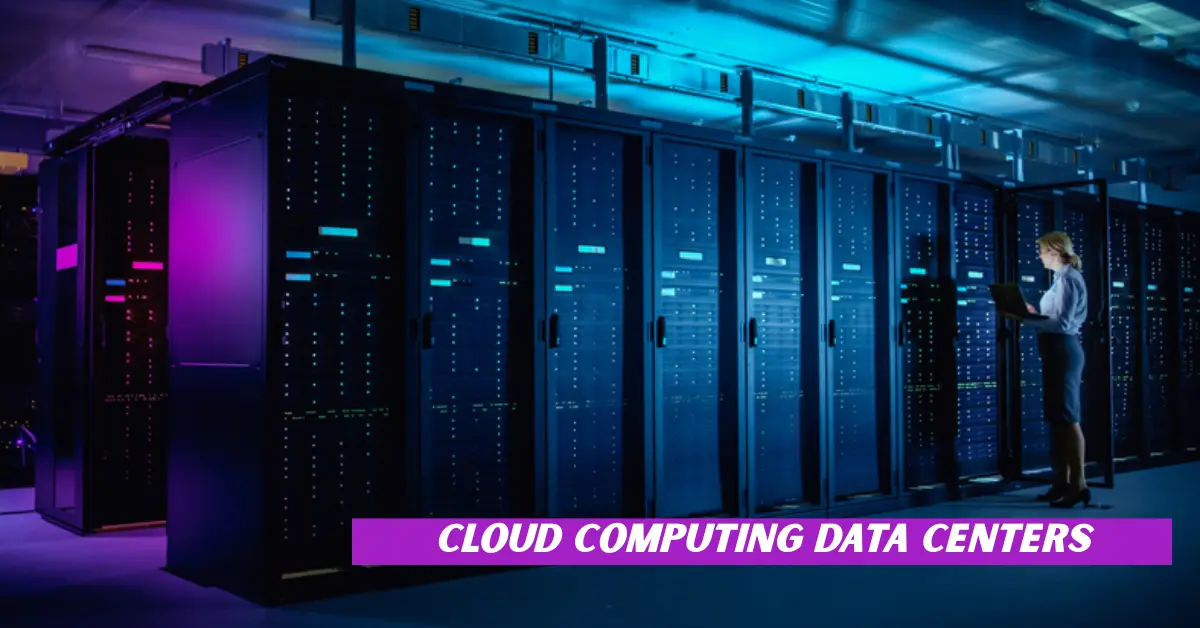
Every time you watch a video, send a message, use a banking app, or store a photo online, you are interacting with something most people never see but rely on every day. Behind all these digital services is a powerful backbone called cloud computing data centers.
Cloud computing data centers are large facilities filled with servers, storage systems, and networking equipment that work together to store, process, and deliver data over the internet. Instead of relying on a single physical computer, modern applications depend on these interconnected systems to run smoothly at a global scale.
From streaming platforms delivering movies without buffering to mobile apps that sync your data instantly across devices, these systems make it all possible. Even critical services like online banking, digital payments, and enterprise software depend on this infrastructure to stay fast, secure, and always available.
At a massive scale, companies like Amazon, Google, and Microsoft operate global networks of these data centers to ensure billions of users can access services without interruption. This real world reliance shows just how essential cloud computing data centers have become in powering today’s digital economy.
What Are Cloud Computing Data Centers
Cloud computing data centers are specialized facilities designed to host and manage large groups of servers that deliver computing power, storage, and applications over the internet. Instead of storing data or running software on a single local machine, everything is handled in a centralized yet globally distributed environment that users can access anytime from anywhere.
In simple terms, these data centers act as the physical foundation of cloud services. They contain thousands of high performance servers connected through advanced networking systems, allowing data to be stored, processed, and delivered at high speed. When you upload a file to the cloud or use an online application, your request is processed inside one of these facilities.
Unlike traditional data centers that serve a single organization or location, cloud computing data centers are built for scale and flexibility. They support multiple users and businesses at the same time, dynamically allocating resources based on demand. This makes them highly efficient and cost effective compared to older infrastructure models.
Core components such as storage systems, virtualization layers, and networking hardware work together to create a seamless digital environment. As a result, users experience reliable access to apps, websites, and services without needing to understand the complex systems working behind the scenes.
How Cloud Computing Data Centers Work
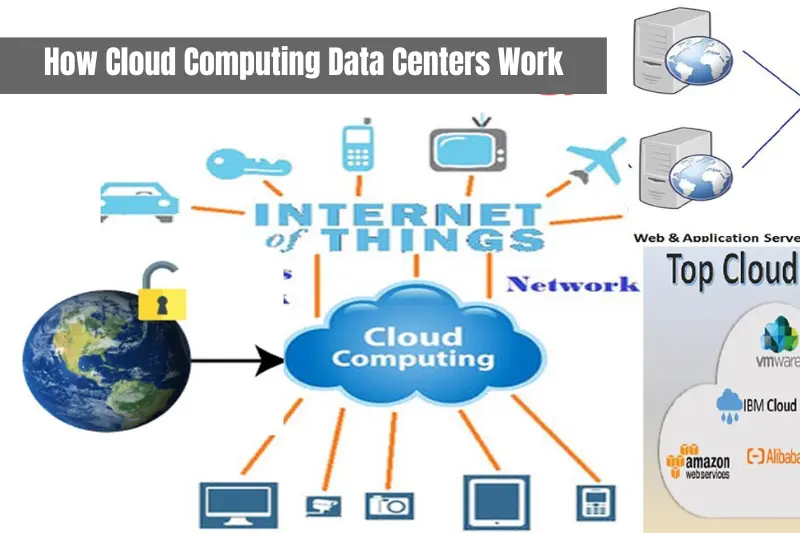
Cloud computing data centers operate by combining physical hardware with advanced software systems to deliver computing services over the internet. At the core of this process are powerful servers that handle three main tasks: storing data, processing requests, and delivering results back to users in real time.
When a user interacts with a cloud based application, such as uploading a file or streaming a video, the request is sent over the internet to a data center. Inside the facility, virtualization technology plays a key role by dividing physical servers into multiple virtual environments. This allows many users and applications to share the same infrastructure efficiently without interfering with each other.
Once the request is processed, the system retrieves or computes the required data and sends it back through high speed networks. These networks are designed with redundancy, meaning if one path fails, another instantly takes over to ensure uninterrupted service.
To maintain performance, cloud computing data centers continuously balance workloads across thousands of servers. This ensures that no single machine becomes overloaded, even during peak usage times such as major app launches or global streaming events.
Behind the scenes, automated monitoring systems track performance, detect failures, and trigger backups when needed. This combination of automation, scalability, and distributed computing is what allows cloud services to remain fast, reliable, and available around the clock.
Types of Cloud Computing Data Centers
Cloud computing data centers are not all the same. They are designed in different ways depending on scale, purpose, and how organizations choose to deliver cloud services. Understanding these types helps explain how the cloud adapts to different business and user needs.
One major type is hyperscale data centers. These are massive facilities built by global technology companies to support millions of users at once. They are designed for extreme scalability, allowing resources to expand quickly as demand grows. These data centers form the backbone of large cloud platforms used worldwide.
Another type is enterprise data centers. These are typically owned and operated by large organizations for their internal operations. They support company applications, data storage, and business systems while giving more control over security and performance.
Colocation facilities are also widely used. In this model, businesses rent space within a shared data center environment. They provide their own hardware while benefiting from the facility’s power, cooling, and network infrastructure.
Finally, edge data centers are smaller facilities placed closer to users. Their main purpose is to reduce delay by processing data near the source instead of sending it to distant locations. This is especially important for applications that require real time response such as gaming, autonomous systems, and live streaming.
Each type plays a unique role in making cloud computing flexible, scalable, and globally accessible.
Why Cloud Computing Data Centers Are Important
Cloud computing data centers play a central role in how the modern internet functions. Nearly every digital service people use today depends on them in some form, from social media platforms and video streaming to online banking and business applications.
One of their most important roles is enabling scalability. Businesses can instantly increase or reduce computing resources based on demand without investing in expensive physical infrastructure. This flexibility allows startups and large enterprises alike to grow quickly while keeping costs under control.
They also improve reliability and uptime. Because data is stored and processed across multiple servers and locations, services can continue running even if one system fails. This level of redundancy ensures that users experience minimal disruption, even during high traffic events or technical issues.
Another key advantage is cost efficiency. Instead of maintaining their own hardware, companies can use shared cloud infrastructure, reducing the need for physical maintenance, electricity, and IT staffing for infrastructure management.
At a global level, major providers such as Amazon, Microsoft, and Google operate vast networks of cloud computing data centers that support billions of users every day. This large scale infrastructure is what makes real time communication, global collaboration, and instant access to digital services possible in today’s connected world.
Security in Cloud Computing Data Centers
Security is one of the most critical aspects of cloud computing data centers because they handle massive amounts of sensitive data, including personal information, financial records, and business applications. To protect this data, multiple layers of security are implemented across both physical and digital systems.
On the physical side, these facilities are highly secured environments. Access is strictly controlled using biometric verification, surveillance systems, security personnel, and restricted entry zones. Only authorized staff can enter specific areas where servers are stored and maintained.
On the digital side, advanced cybersecurity measures are used to protect data from unauthorized access and cyber threats. This includes encryption, which ensures that data remains unreadable without the correct access keys, as well as firewalls and intrusion detection systems that monitor and block suspicious activity in real time.
Another important element is data redundancy and backup systems. Information is often stored in multiple locations so that even if one server or region experiences a failure, the data remains safe and accessible from another site. This helps maintain continuous service and reduces the risk of data loss.
Cloud providers also follow strict compliance standards and industry regulations to ensure data protection and privacy. These frameworks are designed to meet global security requirements and build trust among businesses and users who rely on cloud services every day.
Benefits of Cloud Computing Data Centers
Cloud computing data centers provide several major benefits that have changed how businesses and individuals use technology today. One of the most important advantages is cost efficiency. Instead of investing in expensive physical servers and maintenance, organizations can access computing power on demand and only pay for what they use.
Another key benefit is high performance and speed. These data centers are built with powerful hardware and optimized networks that process and deliver data quickly. This ensures smooth performance for applications like video streaming, online gaming, and business software.
They also offer global accessibility. Users can access their data and applications from anywhere in the world as long as they have an internet connection. This has made remote work, digital collaboration, and global business operations much easier than before.
Scalability is another major advantage. Businesses can easily increase or decrease their computing resources depending on demand. For example, an e commerce website can handle sudden traffic spikes during sales events without crashing or slowing down.
In addition, cloud computing data centers support automatic updates and maintenance. This means systems are regularly updated with the latest features and security improvements without requiring manual intervention from users.
Finally, they provide strong disaster recovery capabilities. Data is continuously backed up across multiple locations, ensuring that information can be restored quickly in case of hardware failure, cyber incidents, or natural disasters.
Challenges and Limitations
Although cloud computing data centers offer many advantages, they also come with certain challenges that organizations need to consider carefully.
One major concern is energy consumption. These facilities require a large amount of electricity to power thousands of servers and keep them cool. As demand for cloud services grows, so does the need for more sustainable energy solutions.
Data privacy is another important issue. Since data is stored on shared infrastructure managed by third party providers, businesses must trust that strong security measures are in place to protect sensitive information. Regulatory compliance and data sovereignty rules can also create complexity for global operations.
Latency can be a limitation in some cases, especially when users are located far from the nearest data center. Even though cloud networks are highly optimized, physical distance can still affect response times for certain real time applications.
Another challenge is dependency on internet connectivity. Since cloud services rely entirely on network access, any disruption in internet service can impact access to applications and data.
Finally, organizations may face vendor lock in, where switching between cloud providers becomes difficult due to differences in platforms, tools, and architectures. This can limit flexibility if long term planning is not carefully managed.
Future of Cloud Computing Data Centers
The future of cloud computing data centers is closely connected to rapid advances in artificial intelligence, automation, and sustainable technology. As digital demand continues to grow, these facilities are evolving to become faster, smarter, and more energy efficient.
One major direction is the integration of artificial intelligence into data center operations. AI is increasingly used to manage workloads, predict hardware failures, and optimize energy usage. This helps improve performance while reducing operational costs and downtime.
Another important trend is the rise of green data centers. Companies are investing heavily in renewable energy sources such as solar and wind power to reduce the environmental impact of large scale computing infrastructure. Cooling systems are also being redesigned to consume less energy and improve efficiency.
Edge computing is also shaping the future of cloud infrastructure. Instead of processing all data in centralized locations, more computing power is being moved closer to users. This reduces latency and improves performance for applications that require real time responses.
Automation will continue to play a major role as well. Future data centers are expected to operate with minimal human intervention, using intelligent systems to handle maintenance, scaling, and security tasks automatically.
Overall, cloud computing data centers are moving toward a more distributed, intelligent, and sustainable model that can support the next generation of digital services and global connectivity.
Real World Applications of Cloud Computing Data Centers
Cloud computing data centers power many of the digital services people use every day, often without realizing it. These facilities make it possible for applications to run smoothly, store large amounts of data, and serve millions of users at the same time.
One of the most common applications is video streaming. Platforms like Netflix and YouTube rely on cloud infrastructure to store content and deliver it quickly to users across different regions without buffering or delays.
Another major use case is online storage and file sharing. Services such as Google Drive and Dropbox depend on cloud computing data centers to store documents, photos, and videos securely while allowing users to access them from any device.
In the financial sector, online banking and payment systems depend heavily on cloud infrastructure. These systems require high security, fast processing, and constant availability to handle transactions in real time.
E commerce platforms also rely on cloud systems to manage product catalogs, process orders, and handle traffic spikes during high demand events such as sales or holiday seasons.
In addition, business software and collaboration tools use cloud computing data centers to support remote work. Applications like video conferencing, project management tools, and customer relationship systems all depend on this backend infrastructure to function reliably.
These real world examples show how deeply cloud computing data centers are integrated into modern digital life, supporting everything from entertainment to essential financial services.
Expert Insights and Industry Perspective
Cloud computing data centers are widely recognized by industry experts as the foundation of modern digital infrastructure. Technology leaders consistently emphasize that the shift from traditional on premises systems to cloud based environments has fundamentally changed how organizations build and deliver services.
One key insight from the industry is the importance of scalability by design. Modern cloud systems are engineered to handle unpredictable workloads, allowing services to remain stable even during sudden spikes in global demand. This is especially critical for platforms that serve millions or even billions of users simultaneously.
Experts also highlight the role of distributed architecture. Instead of relying on a single location, cloud computing data centers are spread across multiple regions and availability zones. This design improves reliability, reduces downtime risk, and ensures faster access to services for users around the world.
Another widely accepted principle is security by layered defense. Industry best practices show that strong protection is achieved by combining physical security, network monitoring, encryption, and continuous auditing. This multi layer approach helps protect sensitive data in complex digital environments.
Leading cloud providers such as Amazon Web Services, Microsoft Azure, and Google Cloud continue to invest heavily in automation, artificial intelligence, and infrastructure optimization. Their ongoing research and development efforts are shaping global standards for performance, security, and efficiency in cloud computing.
Overall, expert consensus suggests that cloud computing data centers are not just supporting digital transformation, but actively driving it forward across industries.
Conclusion
Cloud computing data centers have become the backbone of the modern digital world. They enable everything from streaming entertainment and online banking to business applications and global communication. Without this infrastructure, most of the services people rely on every day would not function at the speed, scale, and reliability expected today.
Throughout this article, we explored how cloud computing data centers work, the different types that exist, and why they are essential for scalability, performance, and global accessibility. We also looked at how security systems protect sensitive data and how continuous innovation is shaping the future of cloud infrastructure.
As technology continues to evolve, these data centers will become even more intelligent, energy efficient, and widely distributed. With advancements in artificial intelligence, edge computing, and green energy solutions, cloud computing data centers will continue to play a central role in powering the next generation of digital services.
In simple terms, they are the invisible engine behind the internet, making the connected world possible for individuals, businesses, and entire industries.
